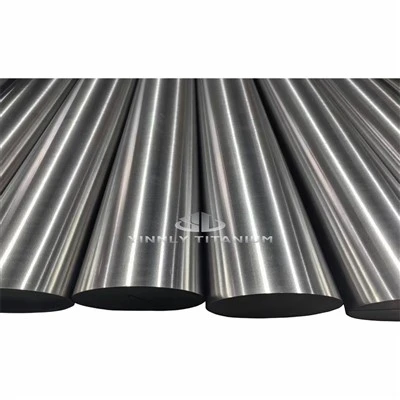

The main raw material for producing titanium ingots is sponge titanium, with the addition of titanium and titanium alloy return materials, pure metals, and master alloys.
Common titanium alloy smelting methods include vacuum arc remelting (VAR), cold hearth furnace melting (CHM), vacuum non-arsenic arc remelting (NC), electroslag remelting (ESR), and vacuum induction melting (CCM). Vacuum arc remelting is the primary method for titanium alloy smelting due to its economic efficiency; cold hearth furnace melting, with its high quality, is one of the commonly used methods for smelting titanium alloys for aero-engines.
A typical process flow for vacuum arc remelting (VAR) is as follows: first, sponge titanium and other raw materials are pressed into electrode blocks (density typically greater than 3.2 g/cm³), then these are welded into consumable electrodes of the required cross-section and length. Subsequently, in a vacuum or inert atmosphere, the electrodes are melted by arc heating and dripped into a water-cooled copper crucible to solidify and form an ingot. Due to the limited degassing and impurity removal capacity of a single VAR melting process, finished ingots typically require two or more melting processes to ensure uniform composition and microstructure.
Promoting low-cost, short-process titanium ingot production technologies that incorporate recycled materials is one of the industry's development trends. Some domestic enterprises have made progress in high-quality titanium alloy ingot melting technology, successfully solving the problem of uneven microstructure in large single-weight titanium alloy ingots and achieving the secondary utilization of titanium residues. To standardize the recycling of titanium resources, the national standard "Recycled Titanium Ingots" (GB/T 45057-2024) officially came into effect on June 1, 2025.