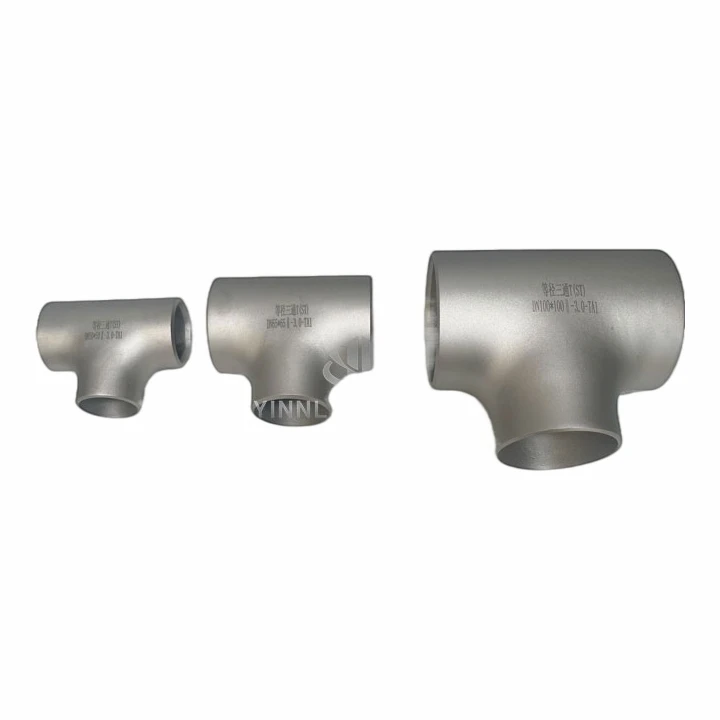

As a critical connecting component within piping systems, titanium tees are widely utilized across fields such as aerospace, petrochemicals, and marine engineering; consequently, their manufacturing processes directly impact product performance and reliability. As an information platform dedicated to the field of titanium materials, "Titanium Home" (Tai Zhi Jia) consistently monitors technological trends within the industry. Based on material characteristics, dimensional specifications, and quality grade requirements, this article systematically reviews the technical features and applicable scenarios of three major process categories-plastic forming, mechanical machining, and welding-and outlines key quality control points to serve as a technical reference for the manufacturing of titanium tees.
Plastic Forming Processes: Balancing Efficiency with Uniformity
1. Hydraulic Bulging Process
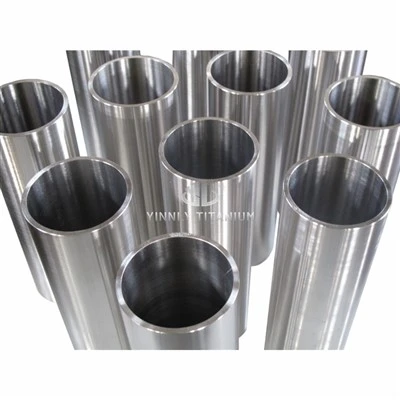
The hydraulic bulging process utilizes a straight pipe blank with a diameter equal to that of the target titanium tee. A hydraulic press applies simultaneous pressure to both ends of the pipe blank, leveraging high-pressure internal fluid to drive the metal flow toward the branch pipe direction within the mold. This process requires the use of a balancing punch to support the formation of the branch pipe, thereby ensuring a uniform distribution of wall thickness in the branch and achieving high production efficiency. Its primary advantages include high material utilization rates and excellent forming precision, making it suitable for the mass production of standard components made from materials such as carbon steel, stainless steel, and titanium.
2. Hot Press Forming Process
Specifically designed for materials with poor high-temperature plasticity-such as titanium-the hot press forming process involves flattening a pipe blank (larger in diameter than the final tee) to create an opening, followed by heating. Radial compression is then applied to induce the metal to flow toward the branch pipe direction, after which the branch is formed through stretching via the mold. This process imposes lower requirements on equipment tonnage; however, it necessitates precise control over heating temperatures (typically maintained above the recrystallization temperature) and deformation rates to prevent cracking or structural defects. It is particularly suitable for the manufacturing of large-diameter titanium tees (DN50 and above).
3. Filler Extrusion Forming
Filler extrusion forming involves packing the interior of a straight pipe blank with an incompressible medium (such as sand grains or ceramic particles). By utilizing bidirectional rams to apply pressure, the metal and the filler are simultaneously extruded outward through radial openings in the mold to form the branch pipe. This method effectively prevents mechanical scratches on the inner wall, and the extrusion height can reach 2 to 3 times the pipe diameter. It is especially well-suited for applications where high inner-wall surface quality is a critical requirement, such as in the food processing or chemical industries.
Machining Processes: Balancing Precision and Flexibility
1. End-Reduction Method
The end-reduction method utilizes a pipe billet with a diameter 15% to 30% larger than that of the finished product. By locally heating and reducing the diameter of both ends, a central bulge is formed; this bulge is then pierced and flanged to achieve the final shape. This process is suitable for large-diameter titanium tees (DN50–DN600); however, the procedure is complex (involving four distinct steps: heating, diameter reduction, piercing, and flanging), the material yield rate is relatively low, and wall thickness distribution requires strict monitoring to prevent localized thinning.
2. Machining Method
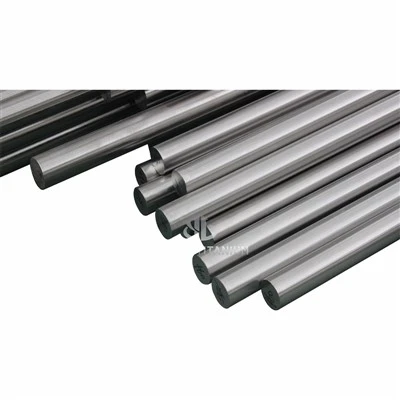
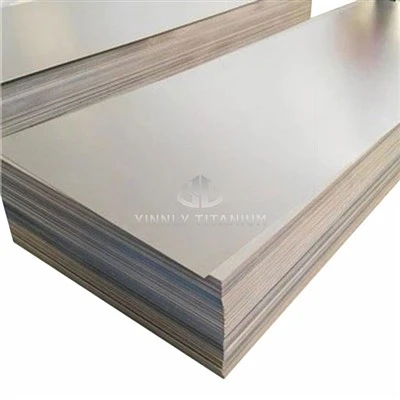
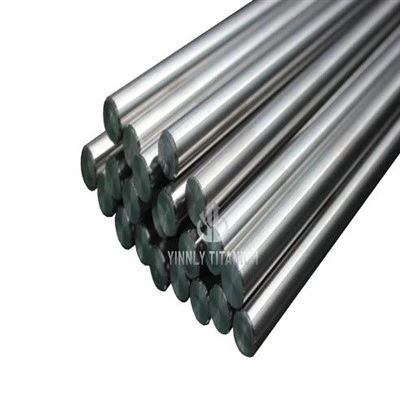
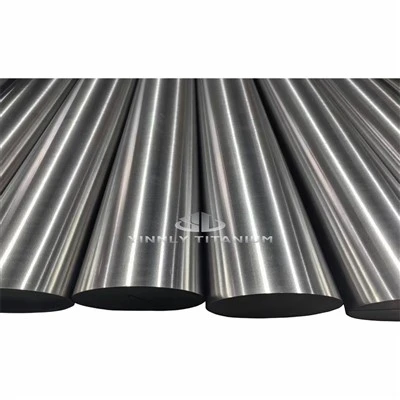
The machining method involves directly cutting, forging, and mechanically processing (e.g., turning, drilling) bar stock or plate material. It is suitable for the manufacture of small-batch or custom-sized titanium tees. Its primary advantage lies in high dimensional precision (achievable within ±0.1 mm); however, material utilization efficiency is low (ranging from only 30% to 50%), and the processing cycle is relatively long. Consequently, this method is frequently employed for the production of small-scale pipe fittings (typically under DN25) or irregularly shaped components.