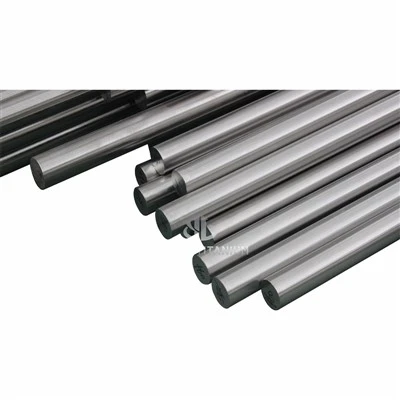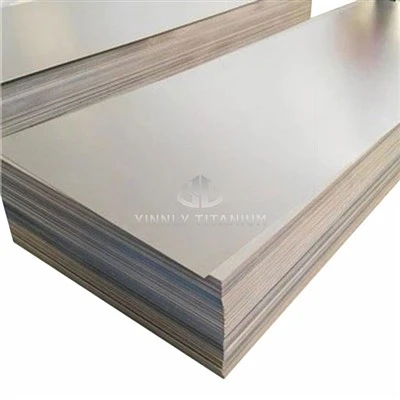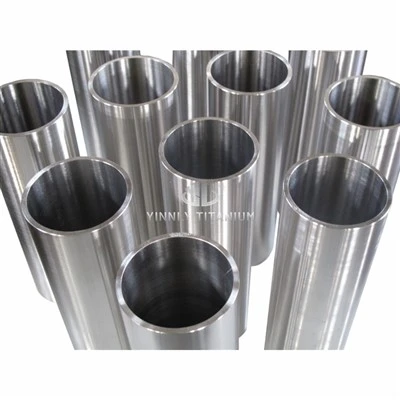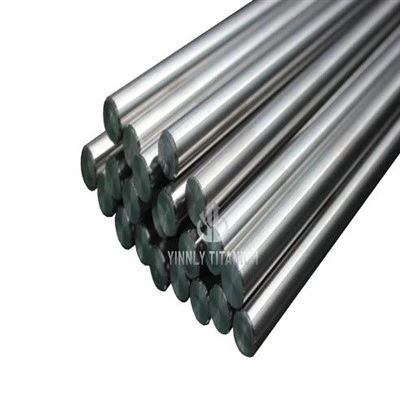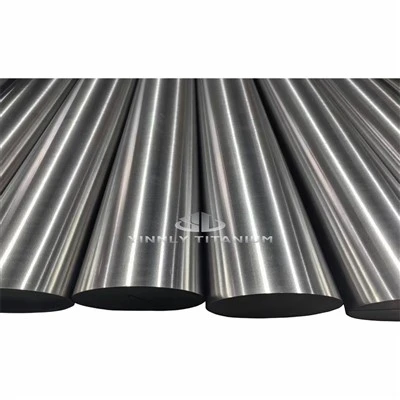

Titanium sheet is a processed metallic material typically utilized in industries such as medicine, aerospace, defense, and public health.
It possesses high mechanical strength and load-bearing capacity, a low specific gravity, and excellent resistance to both high and low temperatures. Furthermore, it exhibits superior corrosion resistance, lower thermal conductivity compared to other metals, and excellent biocompatibility. Although its equilibrium potential is very low-suggesting a significant thermodynamic tendency toward corrosion within various media-titanium is, in practice, remarkably stable across a wide range of environments; for instance, it demonstrates strong corrosion resistance in oxidizing, neutral, and weakly reducing media.
Based on their microstructure following annealing, titanium alloys are broadly classified into three categories: α-alloys (including near-α alloys), (α+β) alloys, and β-alloys (including near-β alloys). National standards designate α-alloys as "TA," β-alloys as "TB," and (α+β) alloys as "TC"; for example, TA1 denotes commercially pure titanium, TB1 denotes a β-titanium alloy, and TC4 denotes an (α+β) titanium alloy. Newly developed alloys often directly adopt U.S. standards, wherein the alloy is identified by its constituent alloying elements and their respective percentages-for instance, the Ti-1023 alloy is a titanium-based alloy containing 10% vanadium, 2% iron, and 3% aluminum. Common grades of titanium sheet materials include TA1, TA2, TC4, among others.