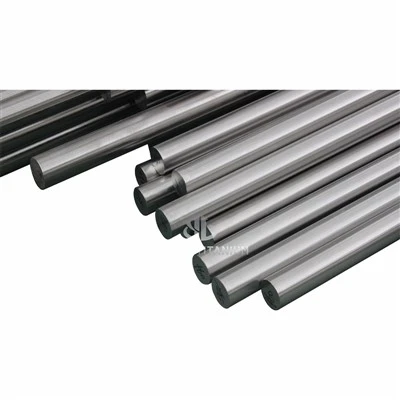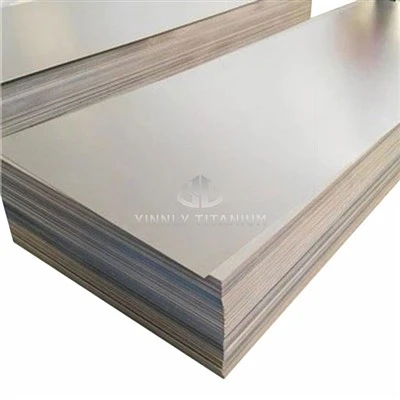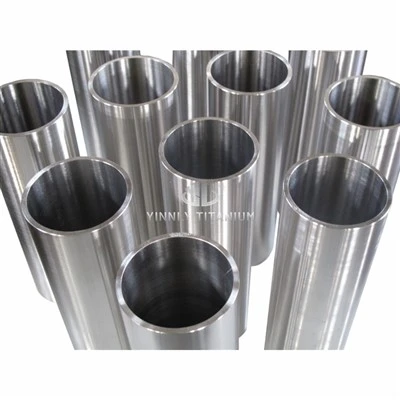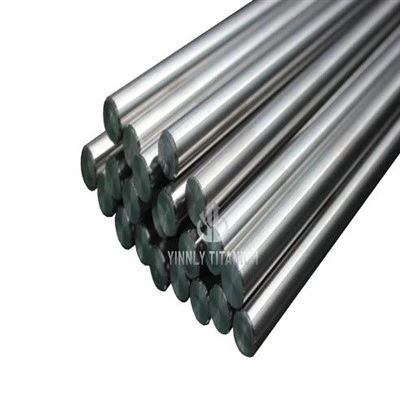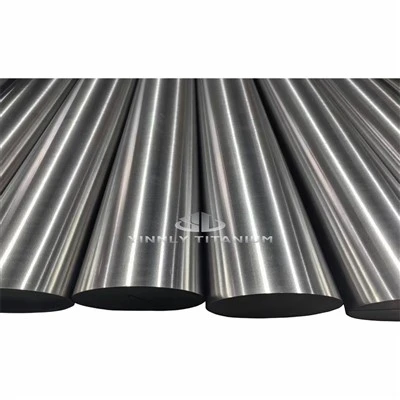

Extremely High Strength-to-Weight Ratio (Specific Strength)
Titanium's "specific strength" (the ratio of tensile strength to density) is one of its most prominent advantages. The tensile strength of pure titanium is approximately 345-550 MPa, while titanium alloys (such as the commonly used Ti-6Al-4V) can reach 895-1100 MPa, comparable to the strength of high-quality structural steel (such as No. 45 steel). However, titanium's density is only 4.5 g/cm², approximately 58% of steel (7.8 g/cm²) and 1.67 times that of aluminum alloys (2.7 g/cm²). This means that, under the same strength requirements, titanium components weigh only 40%-50% of steel components and are about 30% lighter than aluminum alloy components.
Excellent corrosion resistance: Titanium forms a dense TiO₂ passivation film (5–20 nm) in oxidizing media, remaining stable across a wide pH range of 1–14. It is particularly resistant to seawater, chloride ions, and acid/alkali corrosion, making it suitable for marine engineering and chemical equipment.
Compared to ordinary industrial-grade titanium, high-purity titanium ingots have stricter impurity control, avoiding interference from trace elements in experimental results. For example, in semiconductor device manufacturing, titanium is used as a diffusion barrier layer material, and its purity directly affects the device's conductivity and reliability. Vacuum packaging simplifies laboratory procedures, allowing researchers to directly use the material in experiments without needing to treat the surface oxide layer. This "out-of-the-box" characteristic significantly improves research efficiency.